Input kids recognize
Push a launcher, connect a gear, scan a token, pose a figure, or steer a vehicle. The interaction begins with an action a child already understands, so the toy feels welcoming before the technology becomes visible.
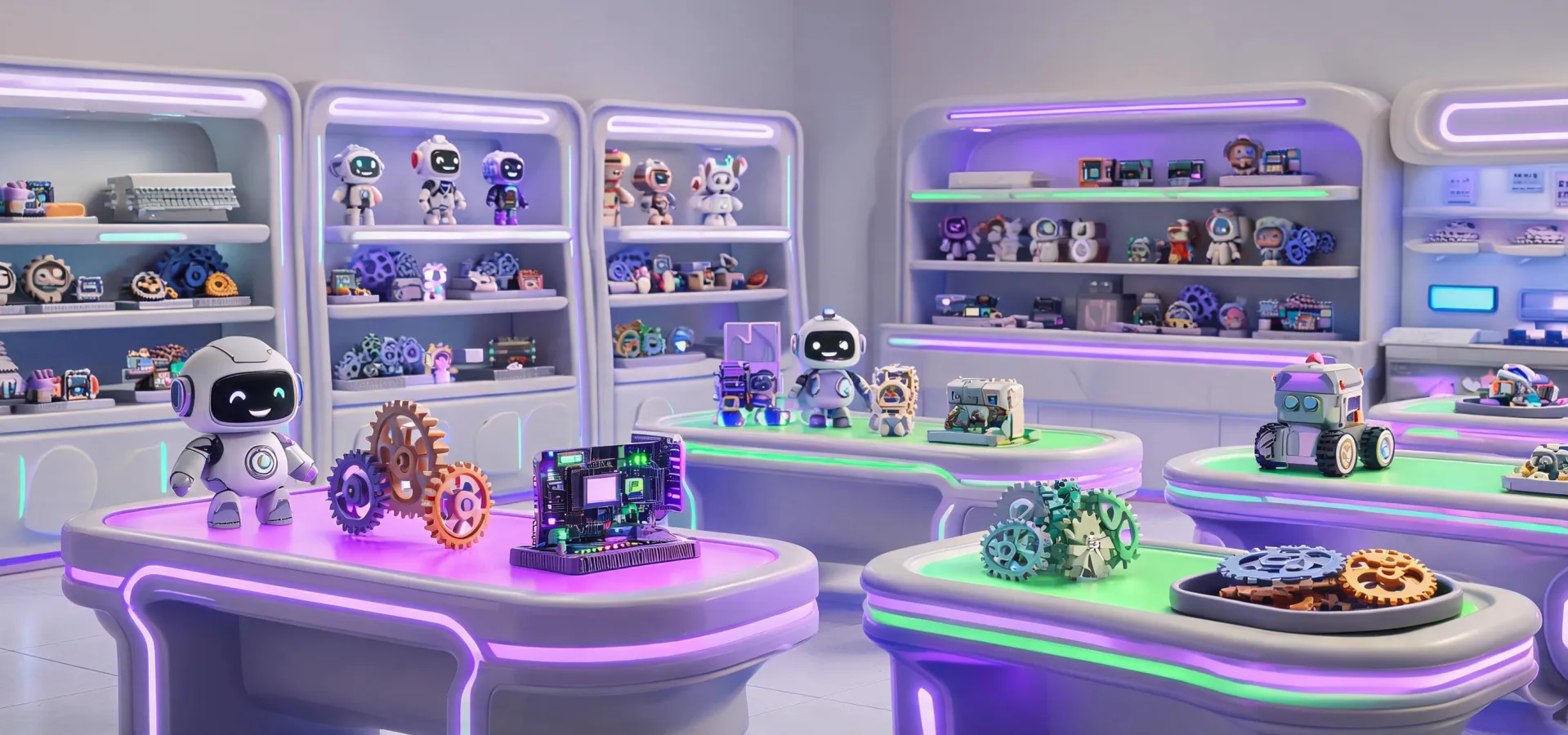
The lab turns motion, story, sensors, simple circuits, and collectible mechanics into toys that reward curiosity without asking families to read a manual first.
Push a launcher, connect a gear, scan a token, pose a figure, or steer a vehicle. The interaction begins with an action a child already understands, so the toy feels welcoming before the technology becomes visible.
Lights, motion, sound, balance changes, and build outcomes show cause and effect immediately. That feedback helps children test a theory, adjust a move, and celebrate the result in the same play session.
Character missions and collectible goals give STEM mechanics emotional context. A simple engineering challenge becomes more memorable when the child is rescuing a friend, upgrading a vehicle, or completing a display set.
| Lab focus | Interactive STEM Toy | Character Collectible Toy |
|---|---|---|
| Core mechanic | Build, trigger, measure, repeat | Pose, reveal, combine, role-play |
| Primary skill | Problem solving, sequence thinking, spatial reasoning | Storytelling, social play, collection planning |
| Safety review | Battery access, part retention, non-toxic contact surfaces | Articulation durability, age grading, small-part clarity |
| Retail cue | Show the experiment and the outcome | Show the character, accessories, and display value |
Construction sets and transforming play patterns help children rotate, compare, connect, and rebuild without turning the experience into a formal lesson.
Launchers, motion triggers, RC controls, and sound responses make the relationship between an action and an outcome visible enough for kids to test again.
A toy that offers more than one solution encourages retrying. The lab favors playful failure states that invite another attempt instead of ending the session.
When mechanics are tied to characters and missions, kids can explain why they are solving the challenge, which deepens both language and reasoning.
The result is not technology for its own sake. It is a play pattern where a child can feel the idea working: a gear turns, a vehicle responds, a puzzle clicks together, or a figure unlocks a new scene. That tactile clarity is what makes innovation useful on a toy shelf.
Share the age band, interaction type, and character world you want to connect; the Spin Master team can frame the concept for retail conversations.